Posted on

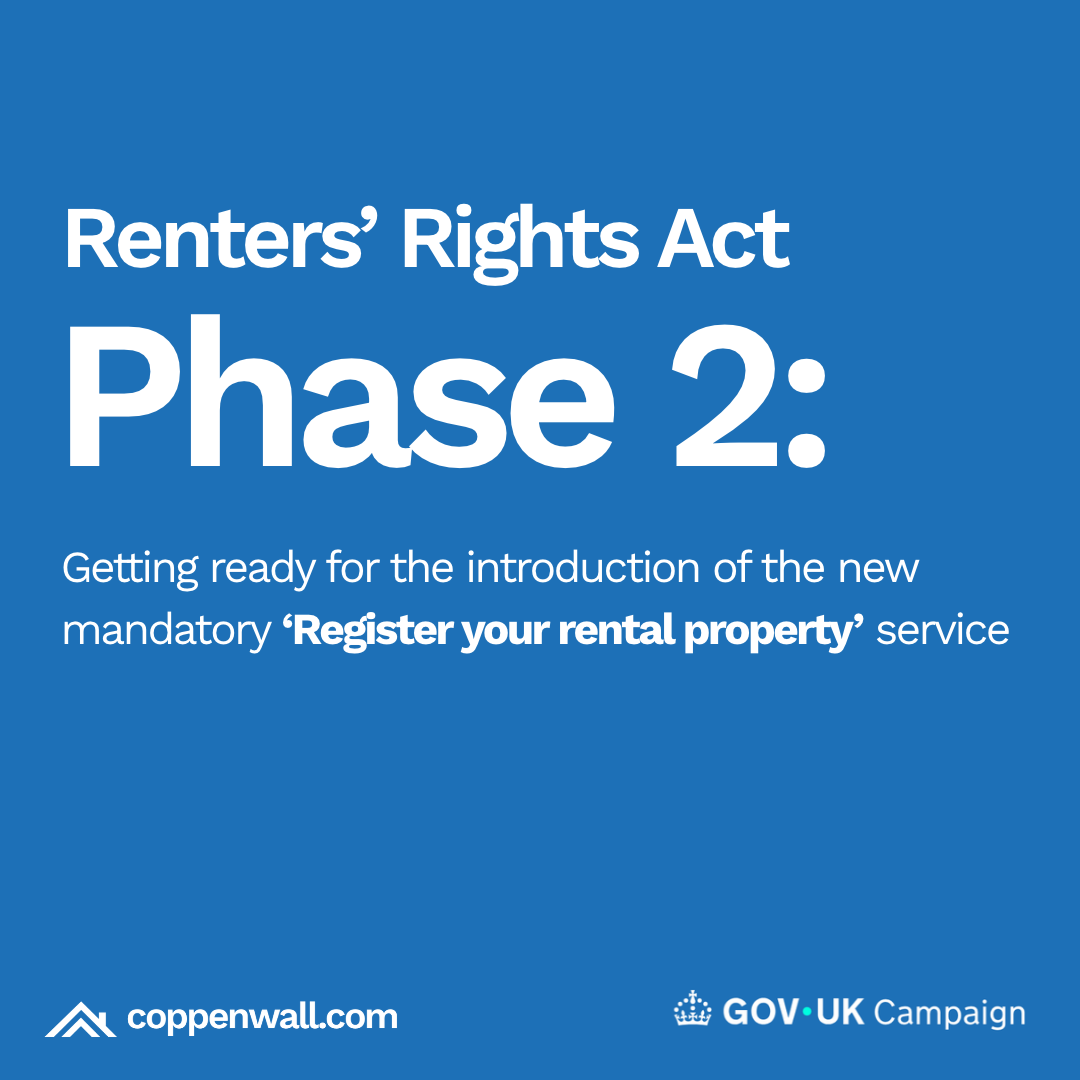
Phase 2 of the Renters’ Rights Act is coming: Everything Landlords Need to Know About the New “Register Your Rental Property” Service

What is the New Service?

Under Phase 2 of the Renters’ Rights Act, the UK Government is creating a centralised digital database where all landlords and their let properties in England must be registered.

Previously referred to as the Private Rented Sector (PRS) Database, the official portal is named the “Register Your Rental Property” service.

The goal of this database is to give local councils a straightforward way to verify property safety, track compliance certificates, and maintain property management standards across the private rented sector.

When Do You Need to Register?

To ensure the system runs smoothly without technical overloads, the government is introducing the mandatory registration on a staggered, regional basis starting 15 December 2026.

Landlords in each region will have a 3-month window from their local start date to complete registration:

RegionRegistration OpensDeadline
West Midlands15 December 202614 March 2027
East of England15 January 202714 April 2027
East Midlands15 February 202714 May 2027
South East15 March 202714 June 2027
Yorkshire & Humber15 April 202714 July 2027
North West15 May 202714 August 2027
North East15 June 202714 September 2027
London15 July 202714 October 2027
South West15 August 202714 November 2027

Note: All let properties across England must be fully registered by 14 November 2027. Landlords with portfolios across multiple regions also have the option to register properties early starting from 15 December 2026.

Key Requirements & Fees

Annual Fee: There is a £65 registration fee per property, which must be renewed every year.

Who Needs to Register Initially? During this initial rollout, you are only required to register properties that are currently let or become let during the rollout period. Unoccupied properties do not need to be registered until they are let (though future phases will require registration prior to marketing)

Penalties for Non-Compliance: Failure to register, or failing to maintain up-to-date property records, can result in civil financial penalties from local councils, restrictions on repossessing properties, or potential Rent Repayment Orders (RROs).

What Information Will You Need to Provide?

When registering a property, you will need to submit key details, including:

  1. Property & Tenancy Details: Address, dwelling type, number of bedrooms, number of occupants, rent amount, and tenancy start dates.
  2. Safety & Health Certificates: Up-to-date Gas Safety Records, Electrical Installation Condition Reports (EICR), and Energy Performance Certificates (EPC).
  3. Licensing Info: HMO, Selective, or Additional Licensing details (where applicable).

Full details can be found on the Gov.uk website : https://housinghub.campaign.gov.uk/renting-is-changing/get-ready-to-register/

Using a Letting Agent? Here’s How We Can Help

If you use a letting agent, government rules state that landlords must initiate the registration process themselves to verify identity details and make the fee payment.

However, your agent or property manager can upload compliance documents and property details on your behalf.

At Coppenwall, our Fully Managed Lettings Service takes the administrative strain off your shoulders:

  • Stay Compliant: We track expiration dates and manage all legal paperwork, gas, electrical, and EPC updates.
  • Seamless Delegation: We upload all required certificates directly to the register once you kick off the process.
  • Complete Peace of Mind: We help you reduce legal risks and protect your investment.

Need Assistance?

If you have questions about the Renters’ Rights Act or need help ensuring your properties are fully compliant ahead of the rollout:

📞 Call us: 01706 489 140

📧 Email us: lettings@coppenwall.com

🌐 Visit: coppenwall.com

Local support from Coppenwall

Coppenwall Lettings is a family-run letting agent based in Rawtenstall, supporting hundreds of landlords in Rossendale and the surrounding areas.

Our management services include rent collection, arrears management, maintenance coordination, tenant communication, landlord insurance, and regular inspections. Having these tasks handled through one local team helps keep the practical side of letting organised.

Whether you have a property ready to advertise or an existing tenancy you would like help managing, we can talk through your circumstances and explain the available options.

Thinking of letting your property in 2026?

Contact Coppenwall about letting and property management. Tell us about your property and the level of support you need, and we’ll help you work out the next step.

Posted on

Letting your property in 2026: a guide for Rossendale landlords

Letting a property should feel organised and manageable. You want tenants who look after their home, rent arriving when it should, and confidence that repairs and paperwork are being handled properly.

Whether you’re letting your first property or have managed rentals for years, now is a good time to review your approach. Changes to tenancy law have made it particularly important to keep your documents, procedures, and day-to-day management up to date.

At Coppenwall Lettings, we help landlords across Rawtenstall, Bacup, Haslingden, Ramsbottom and the surrounding areas make informed decisions about their rental properties.

What has changed for landlords in 2026?

The first phase of the Renters’ Rights Act came into force in England on 1 May 2026, bringing significant changes to most private assured tenancies.

These include:

  • The end of Section 21 “no-fault” eviction notices, with landlords needing a valid possession ground.
  • A move to monthly rolling assured periodic tenancies, in place of fixed-term assured tenancies.
  • Rent increases are limited to once every 12 months through the revised Section 13 process, with at least two months’ notice.
  • A ban on asking for, encouraging or accepting offers above the advertised rent.
  • New protections against discrimination towards applicants with children or receiving benefits, and a requirement to consider tenants’ requests to keep pets.

Landlords should check how these changes affect their existing tenancies as well as any new lets. Read the government’s guidance on the reforms.

Further measures, including the private rented sector database and landlord ombudsman, have a separate phased timetable. They did not all become mandatory in May 26. See the government’s implementation roadmap.

A successful let starts before the first viewing

Good preparation can make a real difference to how a tenancy begins.

Before advertising, take a fresh look at the property. Are there outstanding repairs? Does everything work as it should? Is the property clean, presentable, and ready for someone to make it their home?

Your paperwork deserves the same attention. Safety records, deposit arrangements, and tenancy information need to be organised, with clear reminders for anything that requires renewal or review.

Setting a realistic rent figure also matters. An ambitious figure is only useful if it reflects the property and the local market. A sensible rental valuation helps you plan your income and market the property with confidence, with more chance of securing a long-term tenants who are comfortable paying a fair price.

The work continues after the tenant moves in

A leaking tap, a faulty boiler or a question about the rent can quickly become another task competing for your attention.

For landlords managing a property around a full-time job or family commitments, keeping track of those conversations can be difficult. It becomes harder still if you live away from the area.

Clear communication and prompt attention to repairs help tenants feel supported. Regular inspections, arranged appropriately, also provide an opportunity to identify maintenance needs and keep an accurate record of the property’s condition.

It is often these ordinary, ongoing tasks that determine how smoothly a tenancy runs.

Is managing the property yourself still the right choice?

Self-management can work well when you have the time, knowledge, and reliable support to do it properly.

But it is worth asking whether your current arrangement still suits you. Can you respond when something goes wrong? Do you have dependable contractors? Are your records easy to find? Are you comfortable keeping up with changes to the rules and legislation?

Professional management gives you support with that workload. It does not remove every risk or guarantee uninterrupted rental income, but it can bring consistency to the way your property is managed.

Local support from Coppenwall

Coppenwall Lettings is a family-run letting agent based in Rawtenstall, supporting hundreds of landlords in Rossendale and the surrounding areas.

Our management services include rent collection, arrears management, maintenance coordination, tenant communication, landlord insurance, and regular inspections. Having these tasks handled through one local team helps keep the practical side of letting organised.

Whether you have a property ready to advertise or an existing tenancy you would like help managing, we can talk through your circumstances and explain the available options.

Thinking of letting your property in 2026?

Contact Coppenwall about letting and property management. Tell us about your property and the level of support you need, and we’ll help you work out the next step.
Call us on:
01706 489140

Posted on

The Renters’ Rights Act 2025 & What It Means for Self-Managing Landlords

The Renters’ Rights Act 2025 has officially become law, and implementation dates have now been released by the government, marking the biggest piece of housing legislation in nearly 40 years.

Continue reading The Renters’ Rights Act 2025 & What It Means for Self-Managing Landlords